
Free Speech vs Controlled Narrative

Free Speech vs Controlled Narrative
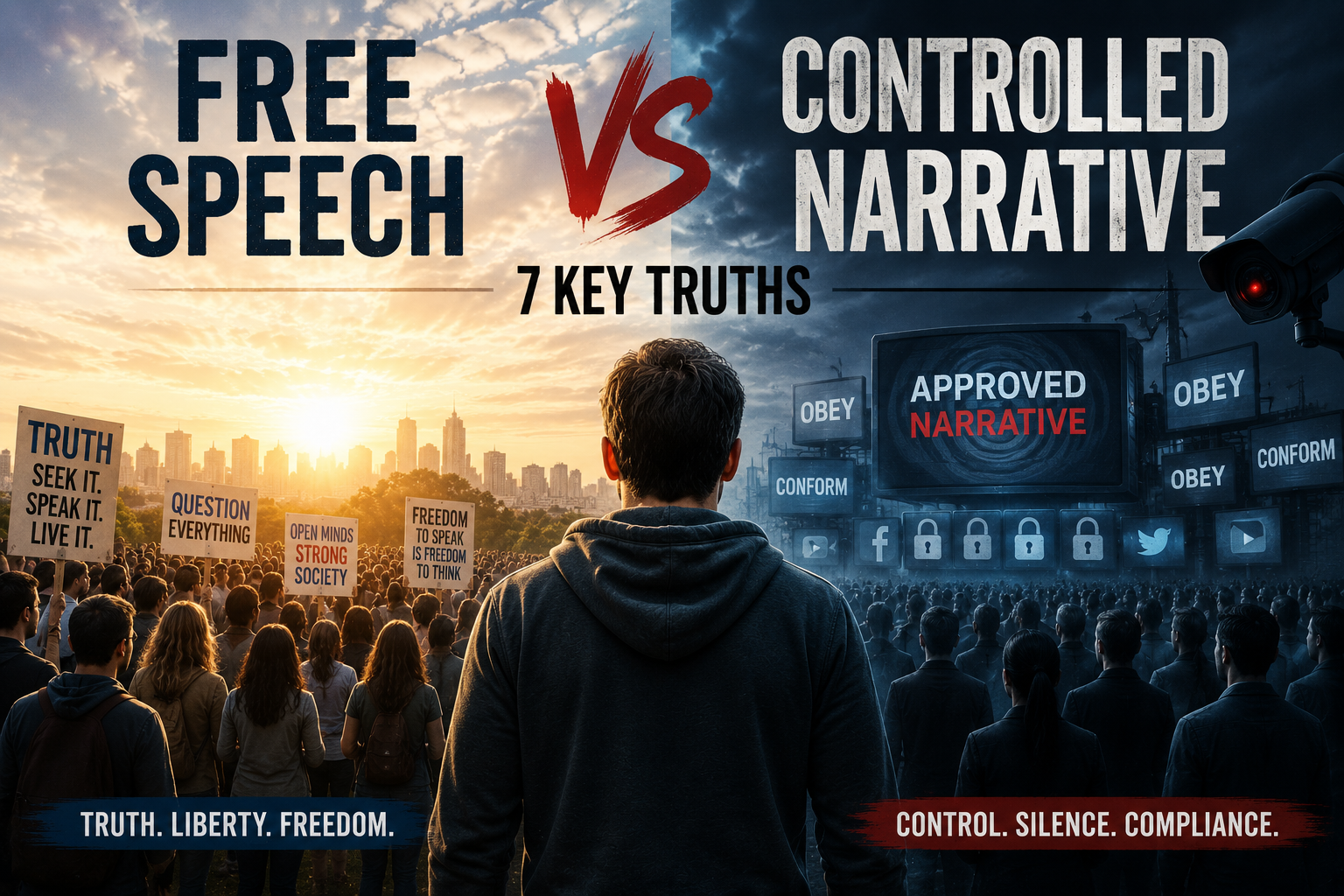
The debate surrounding Free Speech vs Controlled Narrative has become one of the defining issues of our time. Across social media platforms, news outlets, governments, and online communities, people are increasingly questioning who controls information and whether certain viewpoints are being suppressed. While every society needs standards that discourage genuine harm, there is a growing concern that the line between moderation and censorship has become blurred.
The discussion of Free Speech vs Controlled Narrative is no longer limited to politics. It touches education, technology, faith, journalism, and everyday conversations. More people are asking whether they are being presented with the full picture or only a carefully selected version of events.
For those who value liberty, truth, and open discussion, free speech is not merely a political concept. It is a foundational principle that allows ideas to be challenged, tested, and refined. Without it, societies risk becoming trapped inside carefully managed narratives where only approved viewpoints are permitted to exist.
Truth Emerges Through Open Discussion
One of the most important truths about free speech is that truth often emerges through debate. Throughout history, many ideas that were once dismissed, mocked, or censored later proved to be correct. Scientific discoveries, social reforms, and political movements frequently began with individuals who challenged accepted beliefs.
When competing viewpoints are allowed to be heard, people can examine evidence, compare arguments, and make informed decisions. Controlled narratives, on the other hand, often discourage critical thinking by presenting only one approved perspective. The issue of Free Speech vs Controlled Narrative ultimately comes down to whether people are trusted to evaluate information for themselves.
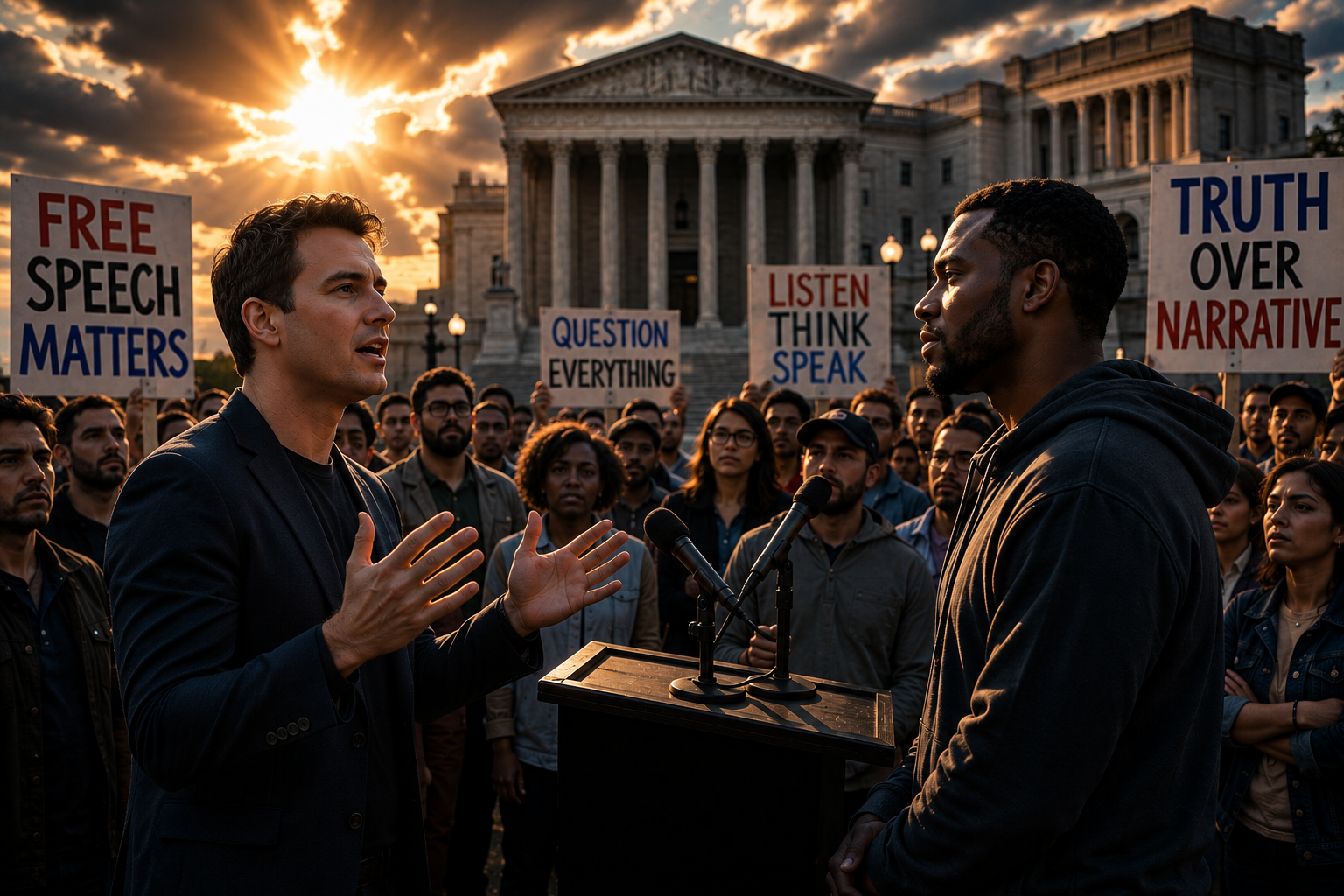
A healthy society should not fear discussion. It should welcome the opportunity to test ideas in the marketplace of thought.
Freedom Requires Access to Different Perspectives
A free society depends on citizens having access to a variety of viewpoints. When information flows freely, individuals can evaluate issues for themselves rather than relying solely on institutions to interpret reality for them.
Controlled narratives often emerge when a small group determines which opinions are acceptable and which should be hidden. While these efforts are often presented as protecting the public, they can also limit independent thinking and discourage legitimate questions.
Freedom is strengthened when people are trusted to analyze information and reach their own conclusions. This is one reason why the debate over Free Speech vs Controlled Narrative continues to attract growing public attention around the world.
Censorship Often Expands Beyond Its Original Purpose
History repeatedly demonstrates that censorship rarely remains limited. Policies introduced to suppress harmful content can gradually expand to include unpopular opinions, political dissent, or inconvenient facts.
What begins as an effort to remove dangerous information can evolve into a system where criticism itself becomes unacceptable. This is why many advocates of free speech remain cautious whenever authorities gain increased power over public discourse.
The protection of speech is especially important when opinions challenge powerful institutions, governments, or cultural trends. The lessons of history suggest that preserving free expression is often the safest path when considering Free Speech vs Controlled Narrative.
Free Speech Encourages Accountability
Open communication helps expose corruption, misconduct, and abuse of power. Journalists, whistleblowers, independent researchers, and ordinary citizens often rely on free speech protections to bring important information to public attention.
Without the ability to question official narratives, accountability becomes difficult. Institutions may become less transparent, and mistakes may go unchallenged.
When people are free to ask difficult questions, leaders and organizations are more likely to act responsibly because they know their actions can be scrutinized publicly. In many ways, the conversation surrounding Free Speech vs Controlled Narrative is also a conversation about accountability and transparency.
Faith and Truth Benefit From Openness
From a Christian perspective, truth does not need censorship to survive. Scripture consistently emphasizes the importance of seeking wisdom, testing claims, and discerning truth from error.
Believers are called to examine what they hear and compare it against God’s Word. Open dialogue provides opportunities to defend truth, share the Gospel, and engage with those who hold different beliefs.
A culture that values free speech allows Christian voices to participate openly in public conversations without fear of being silenced simply because their convictions differ from prevailing opinions.
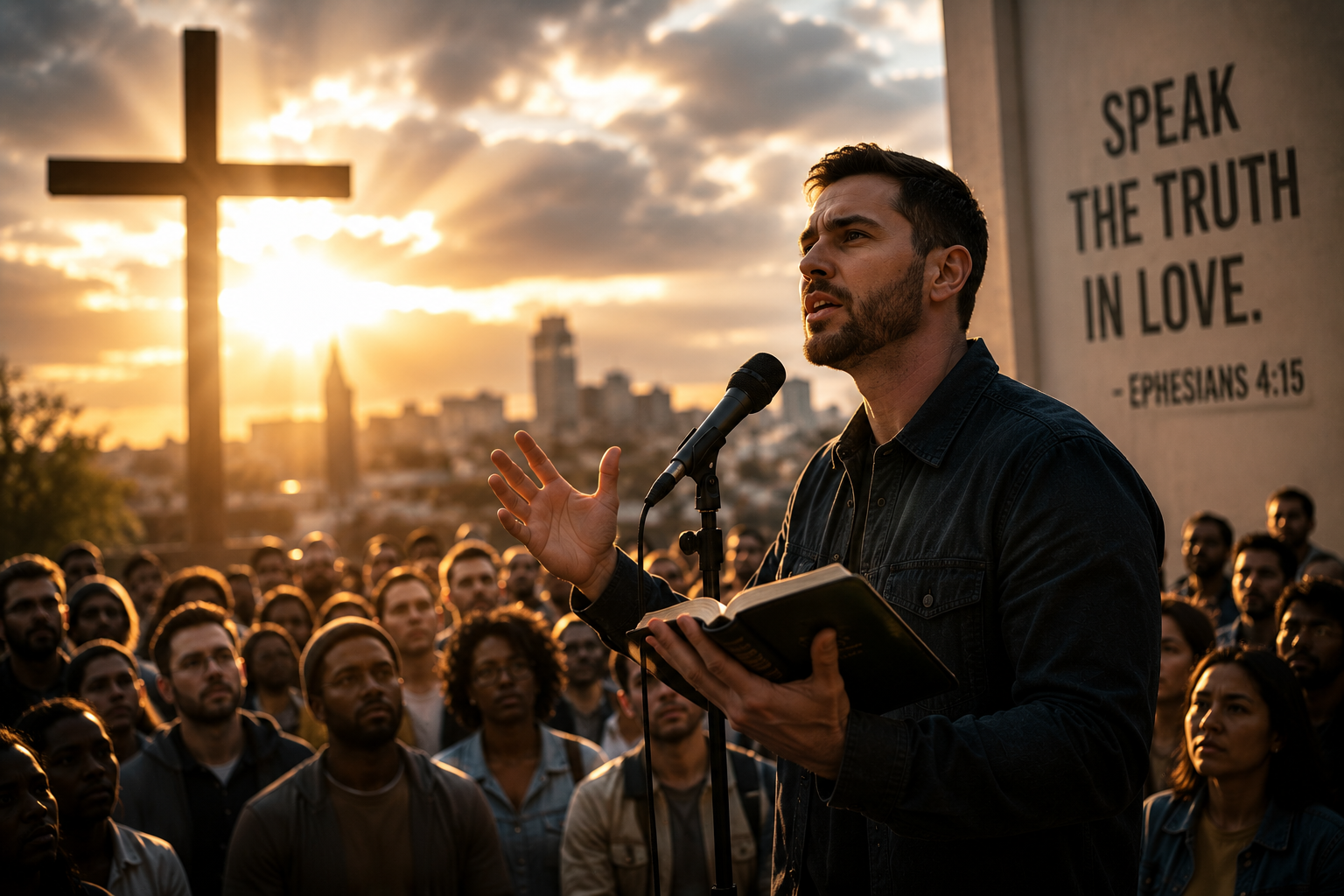
When ideas can be discussed freely, faith-based perspectives have the opportunity to be heard alongside every other viewpoint. For Christians examining Free Speech vs Controlled Narrative, the ability to proclaim biblical truth openly remains an important freedom worth protecting.
Independent Voices Matter
The rise of independent creators, citizen journalists, bloggers, and alternative media platforms has transformed the modern information landscape. These voices often provide perspectives that larger organizations may overlook or dismiss.
Free speech creates opportunities for independent thinkers to contribute to public conversations. Diverse viewpoints help prevent information monopolies and encourage greater transparency.
While not every independent source is correct, the solution to questionable information is more discussion and better evidence, not the suppression of speech. This principle sits at the heart of the Free Speech vs Controlled Narrative debate.
Freedom Is Essential for Future Generations
Perhaps the most important truth is that future generations inherit the freedoms that current generations protect. Once speech rights are weakened, restoring them can be difficult.
The ability to express opinions, question authority, challenge assumptions, and discuss controversial topics remains a cornerstone of liberty. Free speech does not guarantee agreement, but it ensures that people retain the right to participate in the conversation.
The ongoing debate over Free Speech vs Controlled Narrative will continue to shape culture, media, and society for years to come. Those who value freedom recognize that open discussion is not a threat to truth. Instead, it is often the very process through which truth becomes visible.
By protecting free expression, encouraging respectful debate, and defending the right to question prevailing narratives, society creates an environment where truth can be pursued rather than prescribed. In a world increasingly influenced by information control, the defense of free speech remains one of the most important responsibilities of a free people. The future of Free Speech vs Controlled Narrative may ultimately determine whether societies remain open, informed, and free to pursue truth wherever it leads.